
Can Painting Robots Reduce Defects in Liquid Coating Line?
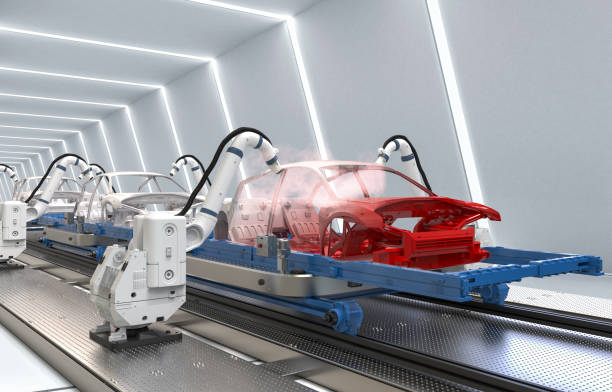
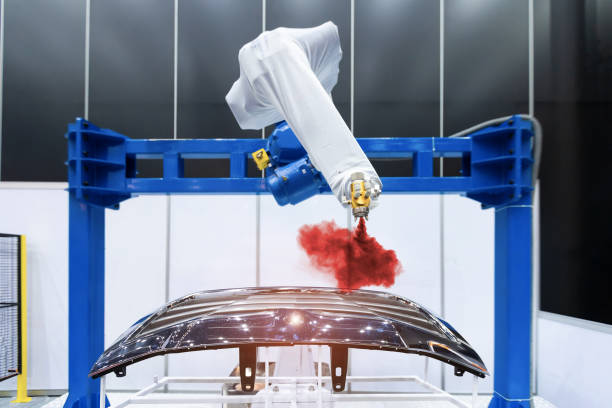
Yes. Painting robots can reduce several common defects in a liquid coating line, including uneven film thickness, runs, overspray, and coating inconsistencies. Their biggest advantage is repeatability. Unlike manual spraying, a robot follows the same spray path, angle, distance, and speed on every cycle. This level of consistency helps stabilize coating quality and reduces variation caused by human operation.
However, robots are not a cure for every coating problem. Surface preparation, paint properties, booth conditions, and process settings still play an important role. When these factors are properly controlled, robotic spraying can significantly improve first-pass quality and reduce rework rates.
Which Defects Can Painting Robots Reduce?
Not every defect comes from the spraying process, but many of the most common ones do.
Uneven Film Thickness
Film thickness directly affects appearance, durability, and corrosion resistance. During manual spraying, small changes in gun distance or travel speed can create noticeable variations.
A painting robot maintains the same motion throughout the entire coating cycle. As a result, coating thickness becomes more uniform across different parts and production batches.
Runs and Sags
Runs usually occur when too much paint accumulates in one area. This often happens when an operator slows down, overlaps excessively, or spends too much time on a complex section.
Robots follow programmed paths with consistent speed and trigger control. This helps reduce excessive paint buildup and lowers the risk of runs.
Overspray
Overspray increases paint consumption and can affect finish quality. It also creates additional maintenance work inside the spray booth.
Because robots maintain precise spray angles and distances, more coating reaches the target surface. This improves transfer efficiency and reduces unnecessary paint loss.
Appearance Variations
Customers often notice differences in gloss, texture, or overall finish quality before anything else.
Consistent application parameters help create a more uniform appearance. This becomes especially important when coating large production volumes where consistency matters from the first part to the last.
Why Robots Improve Consistency in a Liquid Coating Line?
Consistency is one of the biggest challenges in any liquid coating line.
Even highly skilled operators cannot perform exactly the same movement hundreds of times per shift. Fatigue, workload, and production pressure can all affect spraying performance.
Painting robots eliminate much of this variation.
Once a program is optimized, the robot repeats the same motion every cycle. Spray distance remains constant. Gun orientation remains constant. Travel speed remains constant.
This repeatability helps create a stable process, which is often the foundation of good coating quality.
For parts with complex shapes, robotic systems offer another advantage. They can follow precise paths around edges, corners, recesses, and difficult-to-reach areas. Maintaining that level of consistency manually can be challenging, especially during high-volume production.
The Role of Automation in a Modern Liquid Coating Line
Defect reduction is often the first reason companies consider robotic spraying. However, the benefits usually extend beyond quality improvement.
A well-designed liquid coating line can also achieve:
- Lower paint consumption
- Reduced rework and repair work
- More predictable production output
- Improved worker safety
- Better process control
- Easier quality tracking
These improvements often work together. For example, reducing overspray lowers paint costs, while reducing rework helps improve productivity.
Conclusion
Whether a painting robot reduces defects ultimately depends on the source of the problem.
If defects are caused by poor pretreatment, contamination, or unsuitable coating parameters, automation alone will not fix them. However, when quality issues stem from inconsistent spraying, robotic application often delivers more predictable results than manual operation.
For many coating lines, that consistency is the real advantage. Not because the robot sprays faster, but because it sprays the same way every time.