Are You Using the Right Pre-treatment for Your Powder Coating Line Plant?
In industrial coating, pre-treatment is more than a cleaning step. It acts as the foundation for your entire production quality. Many focus too much on curing ovens or spray booths. They often overlook how the delivery method—Spray or Dip—impacts the mechanical efficiency of their powder coating line. Choosing the wrong system creates bottlenecks, wastes chemicals, and leads to coating failures. You must align your pre-treatment choice with your specific part geometry and volume to ensure a high-performance powder coating line plant.
Technical Comparison: Spray Pretreatment vs. Dip Tank Systems
Spray systems offer a major advantage for high-volume powder coating line plant operations. These systems use high-pressure nozzles to provide both chemical cleaning and mechanical impact. This dual action removes stubborn oils, shop dirt, and metal fines quickly. Because the chemicals hit the metal surface with force, the reaction time is often faster than immersion.
In contrast, dip tank systems provide the best solution for complex parts with deep cavities, internal tubes, or hidden surfaces. The liquid reaches every corner that a spray nozzle might miss. If your product has a “cup” shape or intricate welds, a dip system ensures 100% chemical contact. Your production volume usually dictates the final choice. A high-speed, continuous powder coating line often requires the steady flow of a spray tunnel. Meanwhile, batch-heavy shops or facilities handling massive, heavy structural steel benefit from the thorough coverage of dip tanks.
| Feature | Spray Pretreatment | Dip Tank Pretreatment |
| Production Speed | High (Continuous Flow) | Moderate (Batch or Hoist) |
| Cleaning Action | Chemical + Mechanical Impact | Chemical Immersion Only |
| Part Geometry | Simple to Moderate Shapes | Complex / Hollow Geometries |
| Footprint | Long, Linear Tunnel | Compact, Vertical Tanks |
| Chemical Usage | Lower (Controlled Spray) | Higher (Large Bath Volume) |
| Maintenance | Nozzle & Pump Cleaning | Sludge Removal & Bath Testing |
| Automation | Highly Automated Conveyor | Manual or Crane-Assisted |
Strategic Integration into Your Powder Coating Line Plant
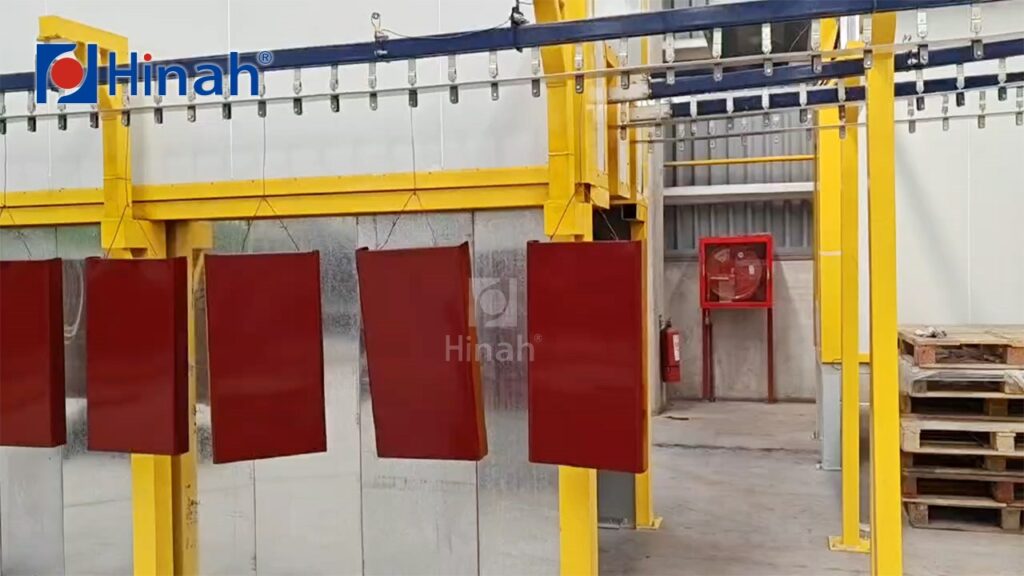
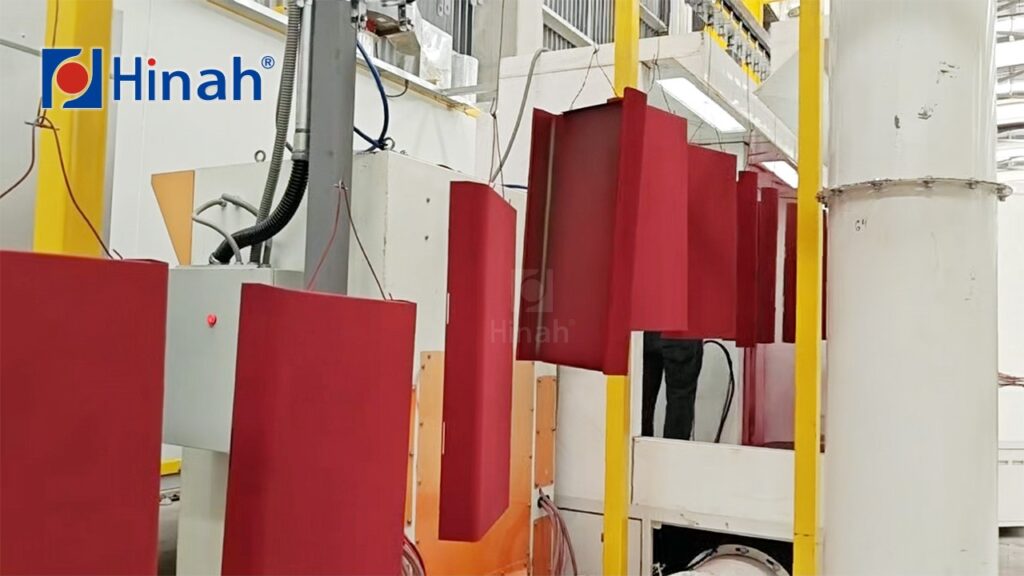
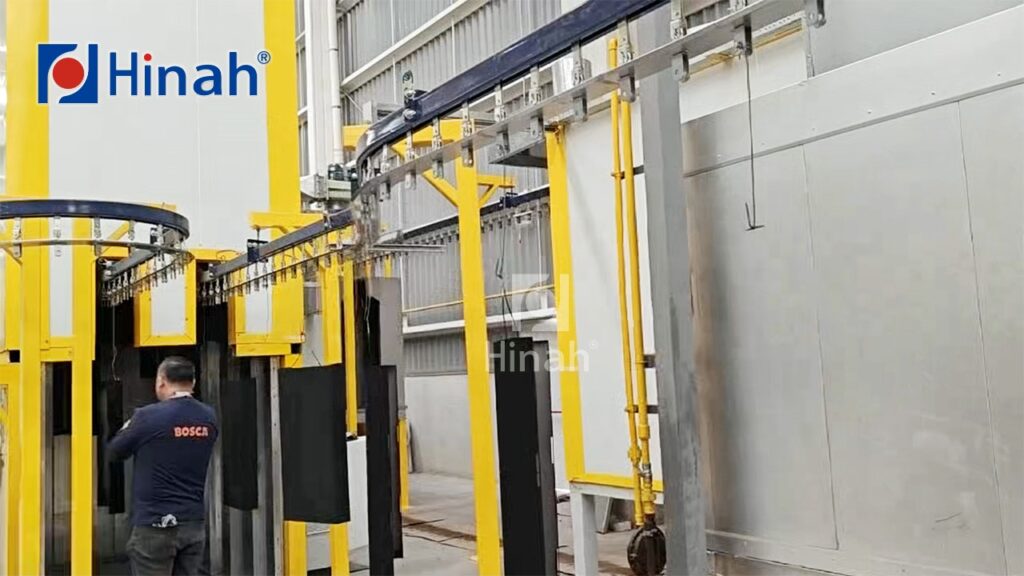
Efficiency depends on how well you integrate pre-treatment with your transport system. For a continuous powder coating line, you must design spray tunnels to match the exact speed of your overhead conveyor. This synchronization ensures the parts spend the correct amount of seconds in each chemical stage. If the conveyor moves too fast, the chemicals won’t react. If it moves too slow, the metal might flash-rust before it reaches the dry-off oven.
If you choose dip tanks, you need automated hoists or overhead cranes to maintain high throughput. These hoists move large part racks between tanks without slowing down the rest of the powder coating line plant. You must also consider your facility’s floor space. Spray tunnels require long, linear footprints that stretch across the factory floor. Dip tanks, however, often use vertical space more effectively. You can install deep tanks in a compact area to handle large parts that would otherwise require a massive spray enclosure.
Why Your Chosen Method Might Still Underperform?
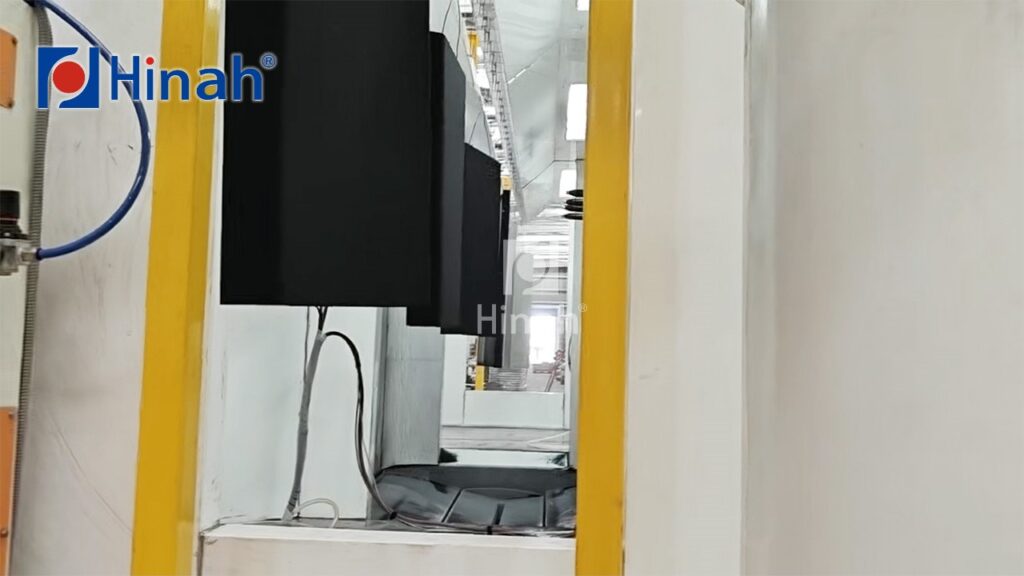
Even a high-end powder coating line plant fails if the pre-treatment layout has mechanical flaws. In dip systems, “trapped air” is a common enemy. If a part enters the tank at the wrong angle, an air pocket prevents the chemical from touching the metal. In spray systems, “shadowing” occurs when the lead part blocks the spray from reaching the part behind it. Both issues lead to poor powder adhesion and premature rusting.
Another major risk is chemical carryover. If you do not allow parts to drain properly between stages, chemicals from the cleaning tank enter the rinse tank. This cross-contamination ruins the chemical balance of your entire powder coating line plant. Furthermore, neglecting routine maintenance creates hidden costs. Clogged nozzles in sprayers create “dead zones” where no cleaning happens. Heavy sludge buildup in the bottom of dip tanks can stir up debris and contaminate fresh parts. You must implement a strict maintenance schedule to keep your powder coating line running at peak performance.
Choosing Based on Substrate and Chemical Type
The material of your parts also influences the design of your powder coating line plant. Aluminum often requires different contact times than cold-rolled steel. Spray systems work excellently for iron phosphate applications because the mechanical spray action helps build the conversion coating. However, if you use a high-end zinc phosphate process for automotive parts, a dip system often provides a more uniform and dense crystal structure.
Before you finalize your powder coating line plant layout, test your parts in both environments. Check for drainage issues and ensure your conveyor can handle the weight of the pre-treatment racks. A well-designed pre-treatment stage reduces your reject rate and lowers your total cost per part. Invest the time to choose the right delivery method now to avoid expensive retrofits later.