How Can Eco Powder Coating Booth Achieve Near-Zero Powder Waste?
Every powder coater knows the frustration of watching good material drift away. When you spray a part, a certain amount of powder always misses the target. In the past, people often accepted this over-spray as a normal cost of doing business. Today, the perspective is changing. Finisher shops are looking closely at how they use resources, not just to meet environmental standards, but to run cleaner, more mindful operations. This is where advanced workshop design steps in. A modern, thoughtful powder coating booth does not just contain the spray; it actively reclaims it. By understanding the physics of airflow and recovery, factories can now capture almost every stray particle and put it right back into the system. Achieving near-zero waste is a realistic standard that honors both the raw materials and the environment we work in.
The Anatomy of Waste: Where Does the Powder Go?
To eliminate waste, we first need to understand how we lose material during the coating process. When a technician or a robot sprays a part, not every particle sticks to the metal surface.
In a standard setup, a large amount of powder bounces off the part or drifts past it entirely. We call this over-spray. In older or poorly designed systems, this stray powder creates a cloud of dust. Some of it settles on the booth walls, some spills onto the workshop floor, and some escapes into the surrounding air. This does more than just create a messy work environment; it wastes expensive raw materials every single minute the line runs.
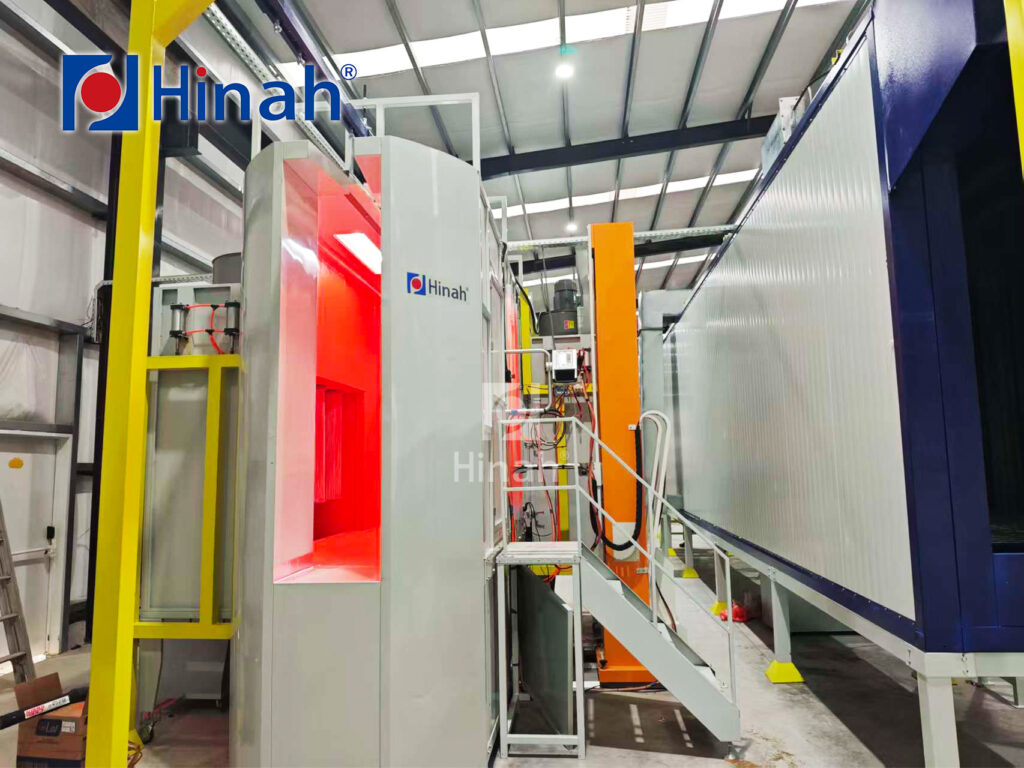
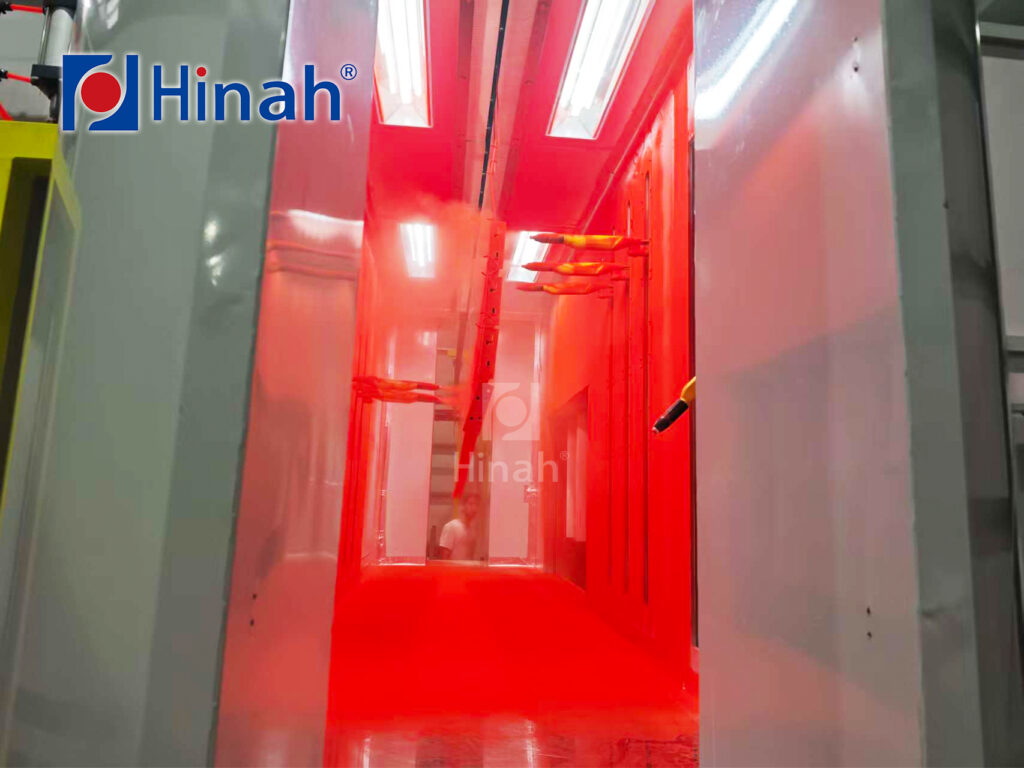
An eco-friendly powder coating booth handles this problem differently from the start. Instead of letting the over-spray escape, the booth uses a continuous, controlled airflow to pull the stray powder away from the operator and into a dedicated containment zone. By controlling the path of the powder immediately, the system ensures that “wasted” material stays clean, unpolluted, and ready for the next step: recovery.
Advanced Recovery Systems: The Core Technology Behind Near-Zero Waste
The real magic happens behind the walls of the booth. Once the system captures the over-spray, advanced recovery technology takes over to separate the reusable powder from the air.
Multi-Cyclone Recovery Systems for High-Volume Efficiency
Think of a multi-cyclone system as a powerful, engineered whirlwind. The booth pulls the powder-laden air into a series of vertical cones at high speed. As the air spins rapidly inside these cones, centrifugal force pushes the heavier powder particles outward against the walls.
The powder then slides down the walls and collects in a hopper at the bottom, perfectly clean and ready to use again. Meanwhile, the clean air moves upward and out through the top. This mechanical separation works incredibly fast. Because powder does not stick to the smooth cyclone walls, operators can clean the system quickly, making it ideal for factories that change colors frequently.
Secondary Cartridge Filtration in a Sustainable Powder Coating Booth
While the cyclone captures the vast majority of the powder, a few ultra-fine particles are too light to spin out. This is where the secondary cartridge filtration system steps in.
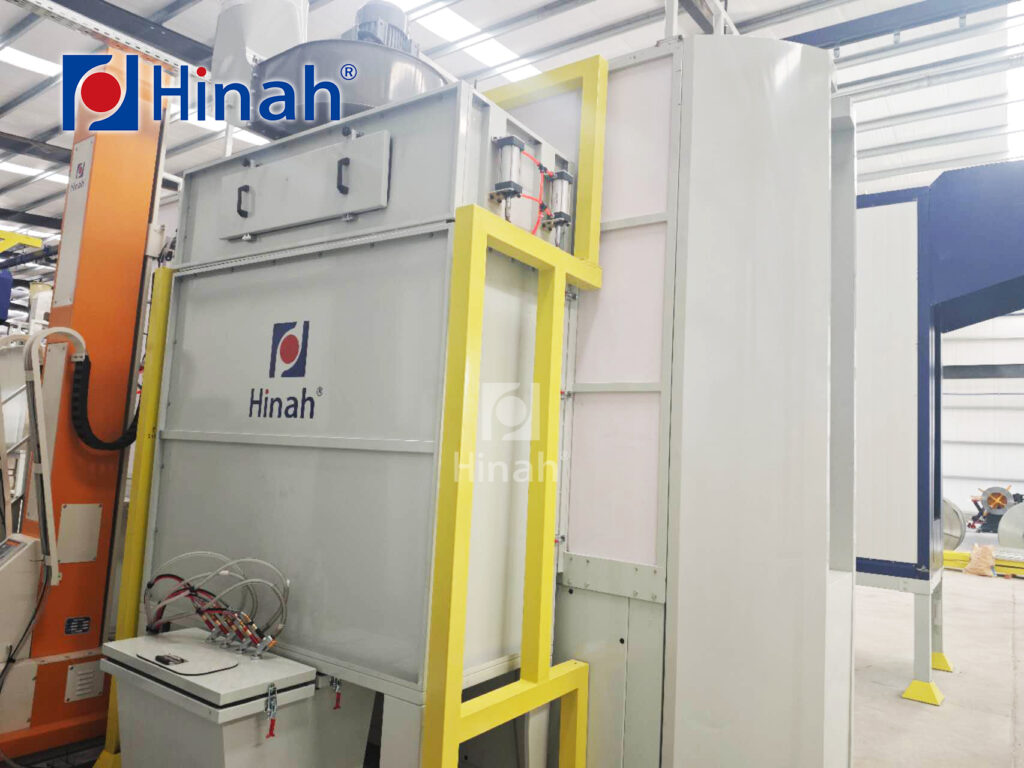
The air travels from the cyclone into a final filter module inside the powder coating booth. These high-efficiency cartridge filters trap the microscopic dust particles down to a fraction of a micron. This dual-stage process ensures two things: it saves the very last bit of your coating material, and it releases 99.8% clean air back into your facility. You get zero emissions outside and a healthier breathing environment inside.
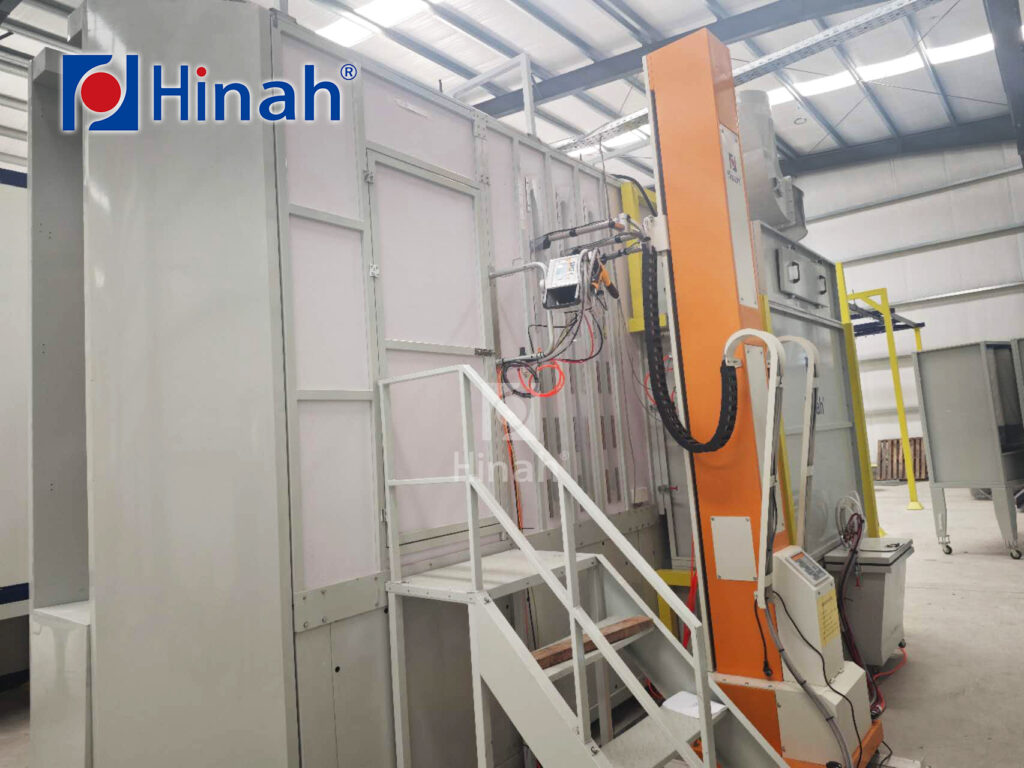
Intelligent Airflow Engineering: Keeping Powder Inside the Loop
Capturing the powder requires more than just raw suction; it demands smart engineering. If the air moves too fast, it pulls the powder away from the part before it can stick. If the air moves too slowly, the powder drifts out into your shop.
An eco-friendly powder coating booth solves this by maintaining a perfect, steady air speed at the booth openings. This controlled movement creates an invisible barrier. It keeps the powder exactly where it belongs while ensuring the operator can breathe safely.
The materials inside the booth also play a major role. Older metal booths act like magnets for static electricity, causing powder to stick to the walls. Modern sustainable booths use non-conductive materials like high-grade polypropylene or PVC. Instead of attracting the powder, these walls actually repel it. The stray particles slide straight down to the floor extraction system, leaving the walls clean and keeping the material in the recovery loop.