How Does Power & Free Conveyor Control Part Flow in Powder Coating Line?
In a powder coating line, parts rarely move at one fixed speed from loading to unloading. pretreatment, powder application, curing, inspection, and unloading may all require different process conditions. This is where a Power & Free Conveyor becomes valuable. Instead of moving every hanger at the same time, it lets individual carriers stop, accumulate, restart, or change routes when the process requires it.
The Powder Coating Institute defines a Power & Free Conveyor as a two-track chain conveyor system that allows products to travel at different speeds and through different routes. This design gives a coating system much more control over part flow.
How Does a Power & Free Conveyor Move Parts?
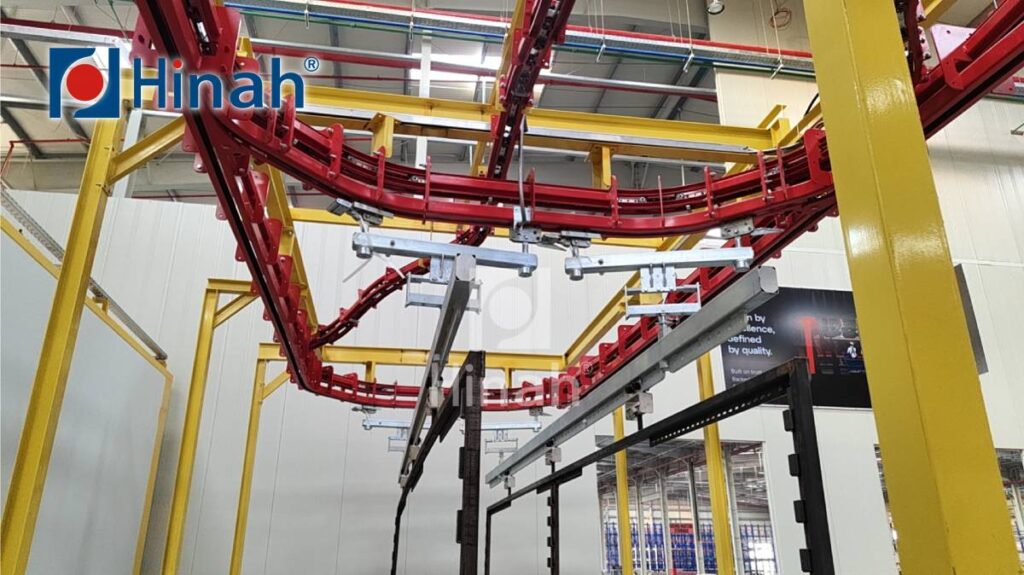
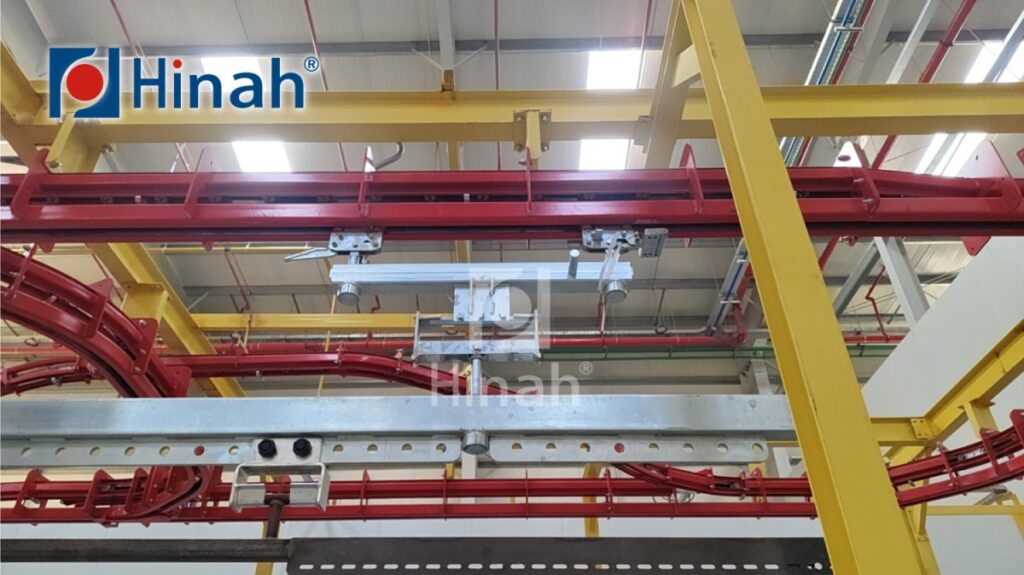
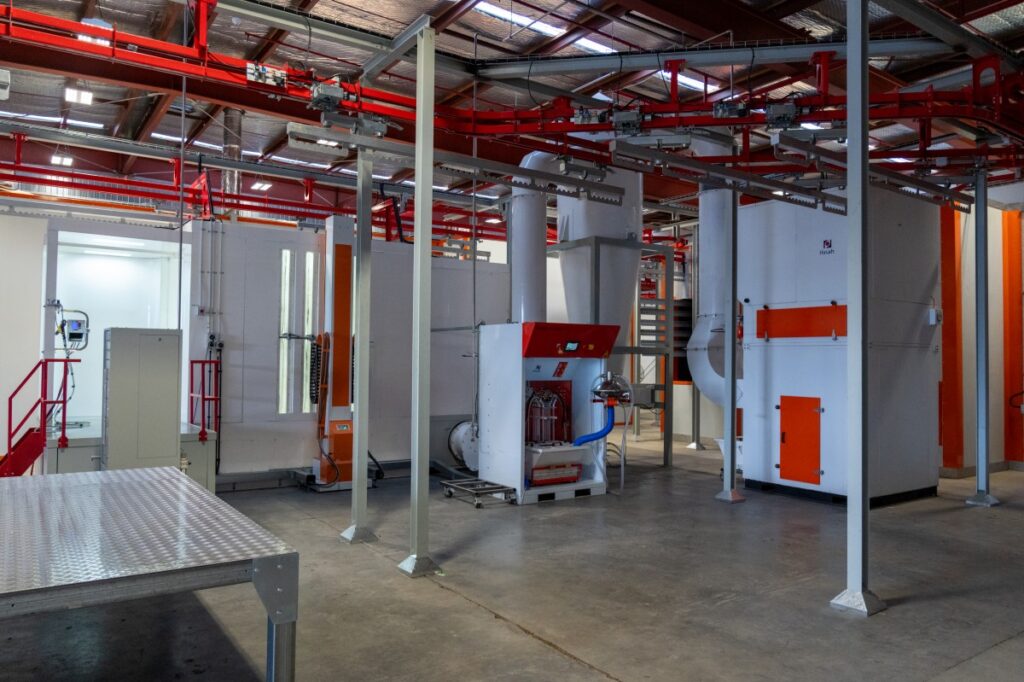
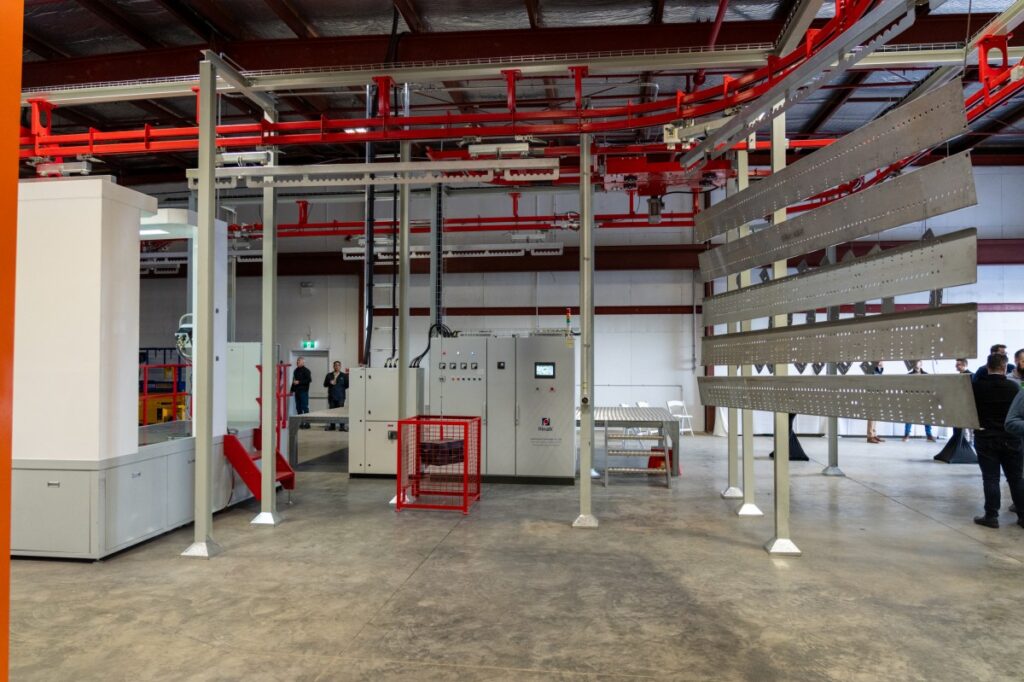
A Power & Free Conveyor uses two separate tracks. The upper power track carries a continuously moving chain. The lower free track supports the trolleys and the parts.
Pusher dogs on the power chain engage the free trolleys and move them along the system. When a trolley reaches a stop point, it can disengage from the power chain. The trolley can then wait while other parts continue moving.
This simple principle creates asynchronous movement. Parts do not have to follow one fixed rhythm. The conveyor can release them again when the next process zone is ready.
For a coating system, this means the conveyor can manage part spacing without stopping the entire production flow.
How Does a Powder Coating Line Use Accumulation?
Accumulation is one of the main reasons to use a Power & Free system.
Imagine that the spray booth is running normally, but the curing oven needs a longer dwell time. A conventional continuous conveyor may force both areas to operate at the same speed. A Power & Free system can separate these movements.
Parts can move through the spray area at one speed. After coating, the system can transfer them into an accumulation section. Several carriers can wait in a controlled queue before entering the oven.
This approach also helps absorb short interruptions. If an operator needs to inspect a part or a downstream section temporarily slows down, the conveyor can hold selected parts instead of stopping the whole line.
The result is a more flexible material flow.
How Does a Powder Coating Line Control Different Speeds?
Different coating stages do not always need the same conveyor speed.
Powder application may require a stable speed to maintain consistent gun coverage. The curing section may require a different speed to provide the required heating time. Cooling or unloading may follow another production rhythm.
A Power & Free Conveyor can create separate operating zones. Each zone can work according to its process requirement while the carriers remain part of the same overall system.
This becomes especially useful when one powder coating line handles parts with different sizes or production requirements. The conveyor does not need to treat every part as identical.
The Powder Coating Institute also notes that proper grounding matters during powder application. Dirty hangers or poor conveyor contact can increase resistance and affect powder transfer. The institute states that total resistance to ground should not exceed one megohm for the conditions described in its guidance.
Therefore, conveyor design is not only about moving parts. Hanger design, contact points, spacing, and maintenance also affect the coating process.
How Does Power & Free Control Part Spacing?
Part spacing directly affects how a coating system works.
If parts enter the spray booth too closely, guns may not have enough time or space to respond to changes in part geometry. Excessive spacing creates another problem because it reduces the number of parts moving through the process at one time.
Power & Free systems solve this by allowing carriers to accumulate and release individually.
For example, a group of parts can move together toward a process zone. A stop mechanism can hold the first carrier while other carriers accumulate behind it. When the zone becomes available, the carriers can move forward in sequence.
The control system can use sensors, switches, stops, and programmed logic to manage this sequence. The exact configuration depends on part dimensions, hanger spacing, line speed, and the required process time.
When Should You Use Power & Free in a Powder Coating Line?
Power & Free is particularly useful when the production process has changing speeds, multiple process zones, accumulation requirements, or different routing requirements.
It is a strong option for lines that handle:
- Different part sizes on the same line
- Heavy or bulky workpieces
- Multiple powder colors or coating routes
- Long curing cycles
- Variable production rates
- Parts that need temporary inspection or buffering
- Complex layouts with curves, branches, or multiple process sections
However, Power & Free is not automatically the best choice for every coating project. A simple product range with stable production and one fixed process speed may need a simpler conveyor arrangement.
The right decision should start with the parts and process. Engineers should evaluate part weight, dimensions, hanger design, required throughput, process times, oven length, booth arrangement, and available floor space before selecting the conveyor structure.
What Safety Features Should the Conveyor Include?
Part-flow control should never come at the expense of safety.
Conveyor systems need accessible emergency stops, suitable guarding, and safe maintenance procedures. OSHA guidance requires powered conveyors to have accessible emergency stop controls in relevant working conditions. It also requires hazardous drives to have appropriate guarding and calls for lockout/tagout during maintenance and repair.
A well-designed system should also consider sensors, carrier stops, overload protection, chain tension, and safe access to maintenance points.
These details become even more important when the conveyor passes through pretreatment equipment, spray booths, curing ovens, and other automated sections.
Last Words
A Power & Free Conveyor controls part flow by separating the movement of carriers from one continuous production rhythm. It can move, stop, accumulate, release, and route parts according to the needs of each process zone.
For a powder coating line, this flexibility can make a major difference when production involves different part sizes, variable speeds, long curing cycles, or multiple process routes. Instead of forcing every section to follow the same movement, the conveyor gives each stage more control over how and when parts move.