How Much Weight Can a Powder Coating Conveyor Carry?
A powder coating conveyor can usually carry anywhere from 20 kg to over 1,000 kg per hanger or load point, depending on its design, chain type, track structure, and drive system.
Light-duty systems often handle small metal parts, tools, or hardware. Heavy-duty systems can move steel frames, automotive parts, aluminum profiles, or industrial machinery. In most cases, the weight capacity depends on more than just the conveyor chain. Hangers, spacing, track curves, and production speed also matter.
If you plan to build or upgrade a coating line, knowing the load capacity helps you choose the right system and avoid downtime.
What Determines Powder Coating Conveyor Weight Capacity?
The weight capacity of a powder coating conveyor depends on several key factors.
Conveyor Type
Different conveyor systems support different load ranges.
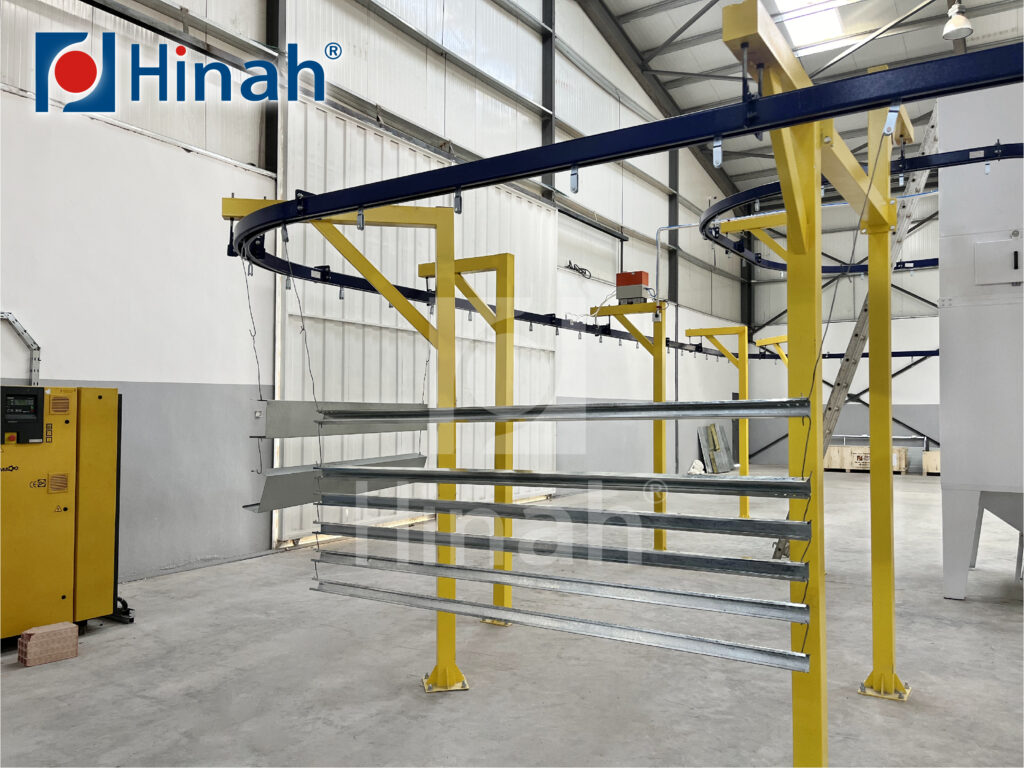
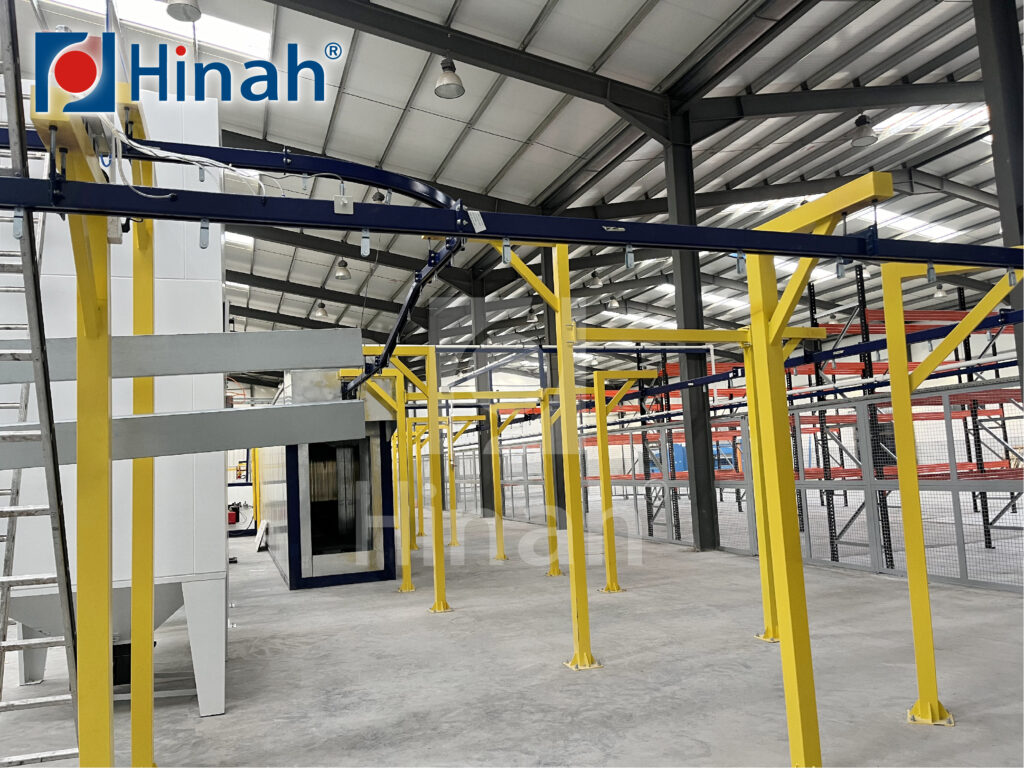
An overhead chain conveyor often carries medium to heavy parts. A floor conveyor may support even larger loads. Accumulation systems need extra strength because multiple loads can stop in one section.
Common conveyor types include:
- Overhead conveyor
- Power and free conveyor
- Accumulation conveyor
- Trolley conveyor
- Skid conveyor
Each design has its own weight limit.
Chain Strength
The chain carries the load every second during operation. A weak chain wears out fast and may stretch under pressure.
Heavy-duty chains use thicker steel and stronger pins. These chains handle larger loads and longer production cycles.
Track Structure
The track supports both the chain and the product.
Straight tracks often handle more weight than curved sections. Sharp bends increase friction and stress. If your line includes many turns, the actual capacity may drop.
Drive Motor Power
The motor pulls the full system.
A small motor may move light products well. Heavy products need stronger motors and gearboxes. If the motor lacks power, the conveyor may slow down or stop.
Typical Weight Range for a Powder Coating Conveyor
Most manufacturers classify conveyor capacity into three groups.
Light-Duty Conveyor
A light-duty powder coating conveyor usually carries:
20–80 kg per load point
This type works well for:
Small brackets
Hardware parts
Hand tools
Light aluminum parts
These systems often run at higher speed because the load stays low.
Medium-Duty Conveyor
A medium-duty system usually carries:
80–300 kg per load point
This range suits many industrial applications, such as:
Metal cabinets
Bicycle frames
Appliance parts
Steel furniture
This is one of the most common capacity ranges in powder coating plants.
Heavy-Duty Conveyor
A heavy-duty powder coating conveyor can carry:
300–1,000+ kg per load point
Heavy-duty systems often serve:
Steel structures
Truck parts
Large machinery
Construction components
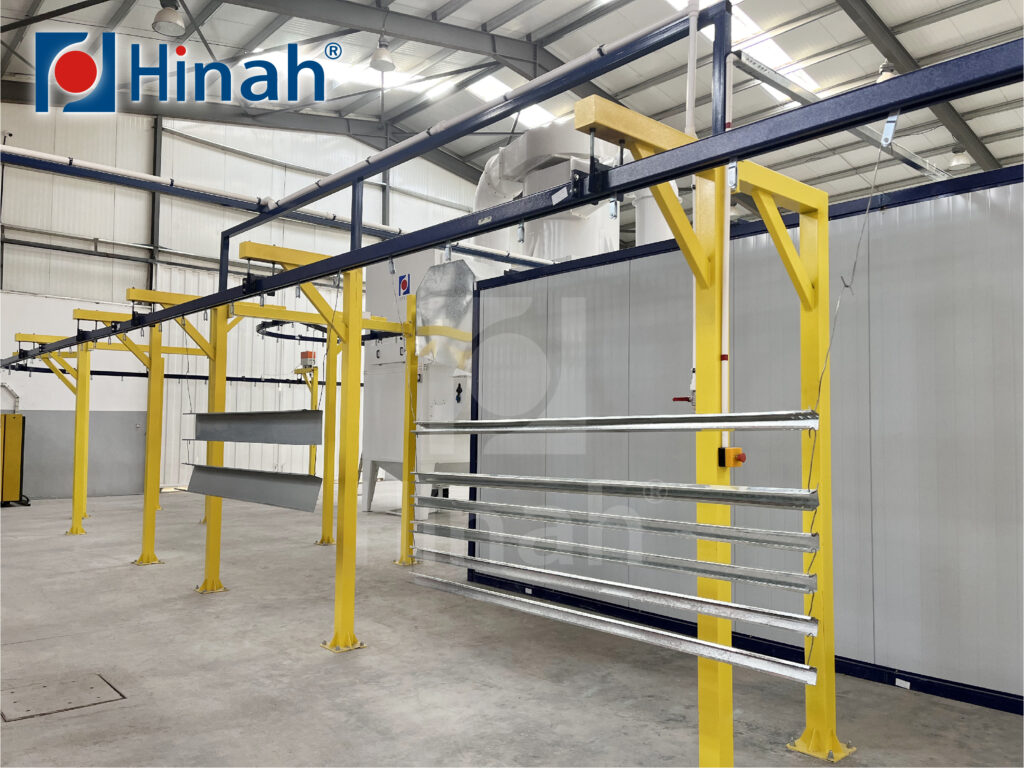
These lines need stronger chain links, reinforced tracks, and larger motors.
How Powder Coating Conveyor Load Is Calculated?
Many buyers only look at product weight. That creates problems.
You should calculate the total load.
Total load usually includes:
- Product weight
- Hanger weight
- Fixture weight
- Safety margin
For example:
If your workpiece weighs 180 kg, and the hanger weighs 20 kg, the actual load becomes 200 kg.
Engineers often add a safety margin of 25–30%.
That means the recommended conveyor capacity should exceed 250 kg.
This extra margin improves reliability and reduces wear.
Why Overloading Conveyor System Is Risky?
Overloading creates more than mechanical stress.
It affects the whole production line.
Faster Wear
Heavy loads increase friction on chains, bearings, and wheels.
Parts wear faster. Maintenance costs rise.
Reduced Coating Quality
Excess load can cause unstable movement.
If products swing or shake during spraying, coating thickness may become uneven.
That leads to quality problems.
More Downtime
An overloaded powder coating conveyor may jam or stop.
Unexpected downtime hurts production output and delivery schedules.
Even short stoppages can reduce efficiency.
How to Choose the Right Conveyor System for Heavy Parts?
Start with your product data.
Ask these questions:
- How Heavy Is Each Part?
Measure the actual production weight.
Do not estimate.
- What Are the Product Dimensions?
Large parts create more mechanical stress than compact parts with the same weight.
Size matters.
Long products may need wider spacing or stronger hangers.
- What Is Your Production Output?
Higher output often means more load per hour.
That affects chain selection and motor power.
- Does the Line Include Curves or Elevation Changes?
Inclines and curves increase resistance.
A conveyor with many turns may need more capacity than a straight line.
These details help manufacturers design the right solution.
Can a Custom Powder Coating Conveyor Carry More Weight?
Yes.
Custom engineering can greatly improve load capacity.
Manufacturers can upgrade:
- Chain thickness
- Track material
- Hanger design
- Motor power
- Drive configuration
A custom powder coating conveyor often performs better in heavy industrial environments.
This matters when standard systems cannot meet production needs.
For example, steel fabrication plants often require reinforced conveyor structures because standard systems cannot safely move oversized parts.