How to Avoid Warping in Automatic Powder Coating Line for Thin Metal Sheets?
Thin metal sheets are widely used in industries such as cabinets, appliances, and electrical enclosures. During powder coating, they are also the most sensitive parts to heat. In an automatic powder coating line, the curing process requires high temperature to melt and harden the powder film. However, thin sheets have low structural rigidity. When exposed to heat, they can expand unevenly and lose shape easily.
Warping may look like a small defect, but it can cause serious problems. It affects assembly accuracy, surface quality, and overall product appearance. In some cases, the parts even become unusable.This is why controlling warping is not only about coating quality. It is also about keeping the part stable throughout the entire curing process.

What Causes Warping in Thin metal sheet Automatic Powder Coating Line?
Warping in thin metal sheets does not come from a single reason. It usually happens when heat, time, and support are not well balanced in the process.
Uneven Heating Across the Workpiece
Inside the curing oven, heat is not always distributed evenly. Some areas of the sheet may heat up faster than others. When one side expands more than the other, the sheet starts to bend. Poor airflow makes this problem even worse.
Excessive Curing Temperature
Each powder coating has a proper curing temperature range. If the oven temperature is set too high, the metal absorbs more heat than needed. Thin sheets react quickly to this heat. The material expands too much and then fails to return to its original shape after cooling.
Improper Dwell Time and Line Speed
Line speed directly controls how long a part stays in the oven. If the conveyor runs too slowly, the sheet stays under heat for too long. This creates extra thermal load and increases deformation risk. If the speed is not stable, the heating condition also becomes inconsistent.
Inadequate Hanging or Fixturing
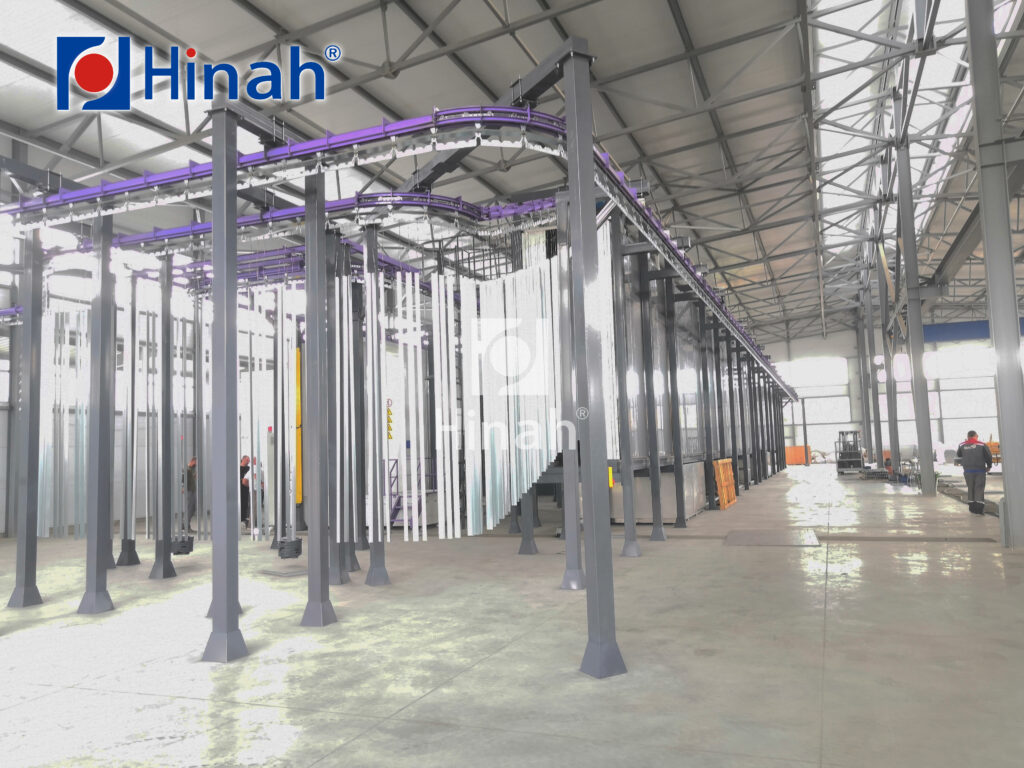
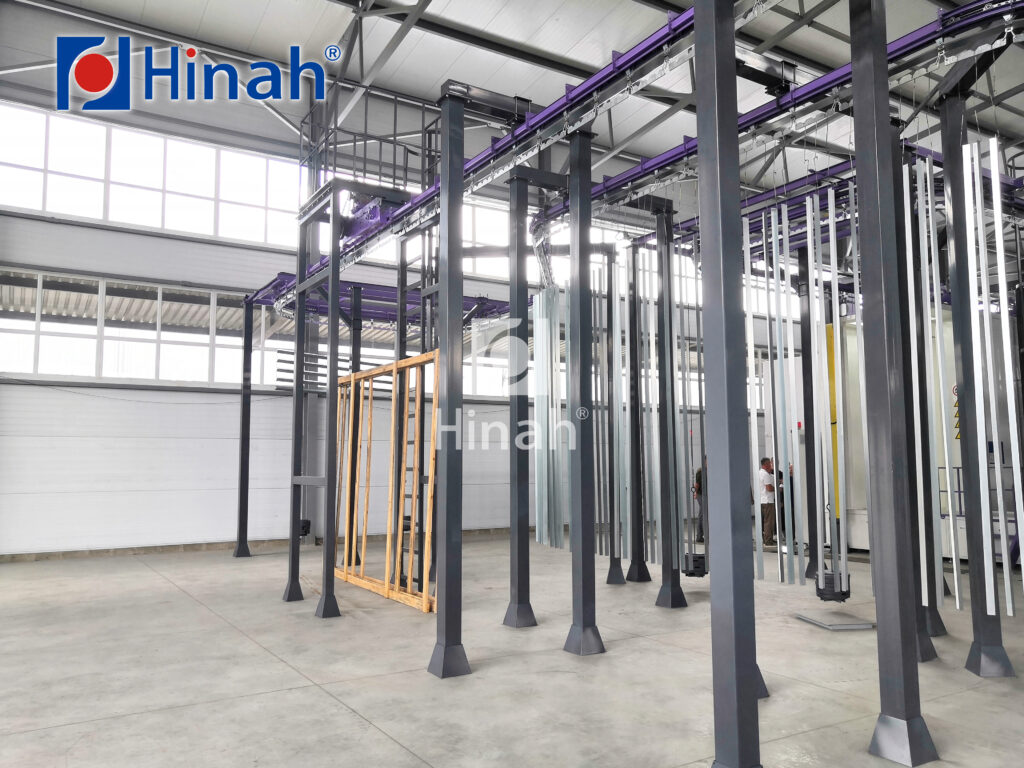
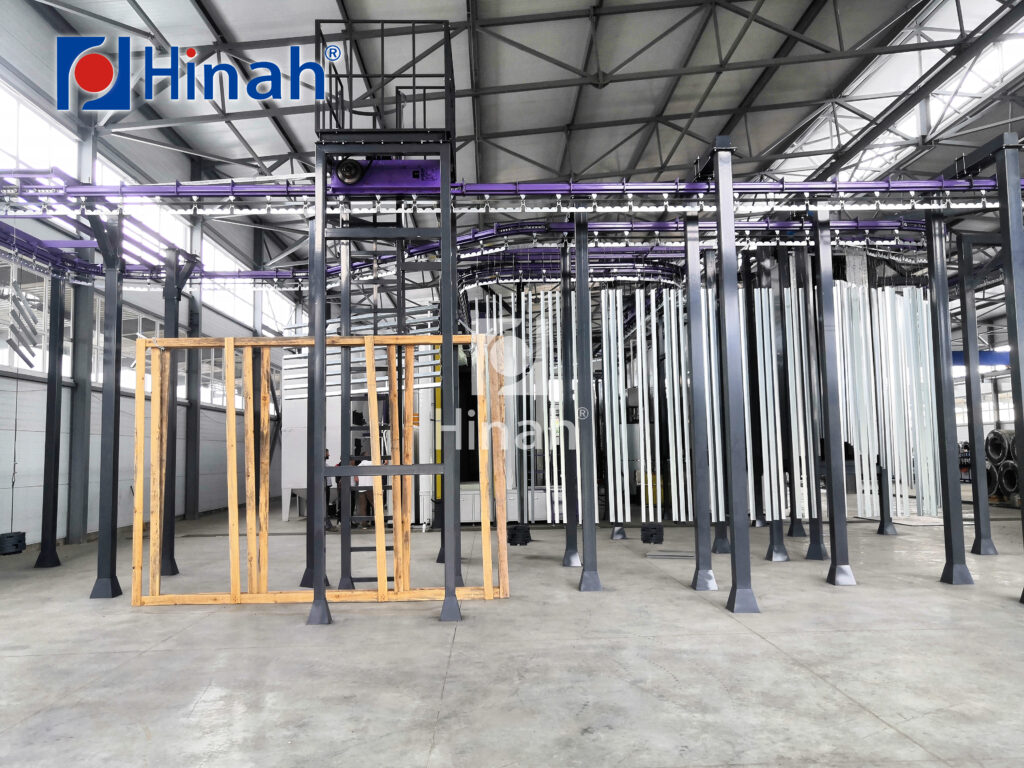
Thin sheets need stable support during curing. If the hanging points are weak or uneven, the sheet can shift or sag under heat. Poor fixture design also creates stress concentration in certain areas, which makes deformation more likely.
Key Process Parameters That Affect Warping
Several key process parameters directly influence whether thin metal sheets will warp in an automatic powder coating line. The most important ones include the oven temperature profile, the balance between line speed and curing time, the material thickness, and the curing behavior of the powder itself. When these factors are not well matched, heat builds up unevenly and the sheet loses its shape during curing.
How to Prevent Thin Sheet Warping in Powder Coating Line?
Warping can be controlled when the process is well balanced and the equipment is properly set. The goal is to keep heat stable and reduce stress on thin metal sheets during curing.
Optimize Oven Temperature and Zoning
Use a stable temperature curve instead of sudden heat changes. A multi-zone oven helps the sheet heat up step by step. This reduces thermal shock and keeps expansion more even across the surface.
Match Line Speed with Curing Requirements
Line speed should match the curing window of the powder. If the speed is too slow, the part stays too long under heat. A stable and well-calculated speed helps avoid overbake and keeps the sheet shape stable.
Improve Airflow Uniformity
Good airflow inside the oven helps distribute heat evenly. When hot air moves smoothly around the parts, temperature differences become smaller. This reduces local stress and lowers the risk of bending.
Use Proper Fixtures and Hanging Methods
Thin sheets need firm and balanced support. The hanging points should spread the load evenly. A stable fixture design helps keep the part in position during heating and reduces deformation caused by gravity and thermal expansion.