How to Design Busbar Powder Coating Line for Different Lengths?
Busbars rarely come in one standard length. A production shop may process short copper bars for compact switchgear one day and much longer sections for power distribution systems the next. This variation creates a practical engineering question: how should a powder coating line be designed when busbar lengths change frequently?
The answer is not simply to make the conveyor longer. A well-designed powder coating line should account for busbar length, loading method, spray coverage, curing requirements, and production mix. When these factors are considered together, the line can handle different busbar lengths without making the system unnecessarily large or difficult to operate.
Start with the Busbar Size Range
The first step is to define the actual product range.
Record the minimum and maximum busbar length, width, thickness, weight, and cross-sectional shape. Also consider whether the same line will process copper and aluminum busbars.
Length affects the conveyor and oven, but it is not the only dimension that matters. A wide or thick busbar can require a different spray position or gun arrangement. Heavy sections may also need stronger hooks and a different loading method.
IEC 61439-1 covers construction requirements, technical characteristics, and verification requirements for low-voltage switchgear and controlgear assemblies. For busbar systems, IEC 61439-6 specifically addresses low-voltage busbar trunking systems.
These standards do not define a universal powder coating line layout. Instead, they highlight why the final equipment design should start with the electrical application and product specifications.
How a Busbar Powder Coating Line Handles Different Lengths
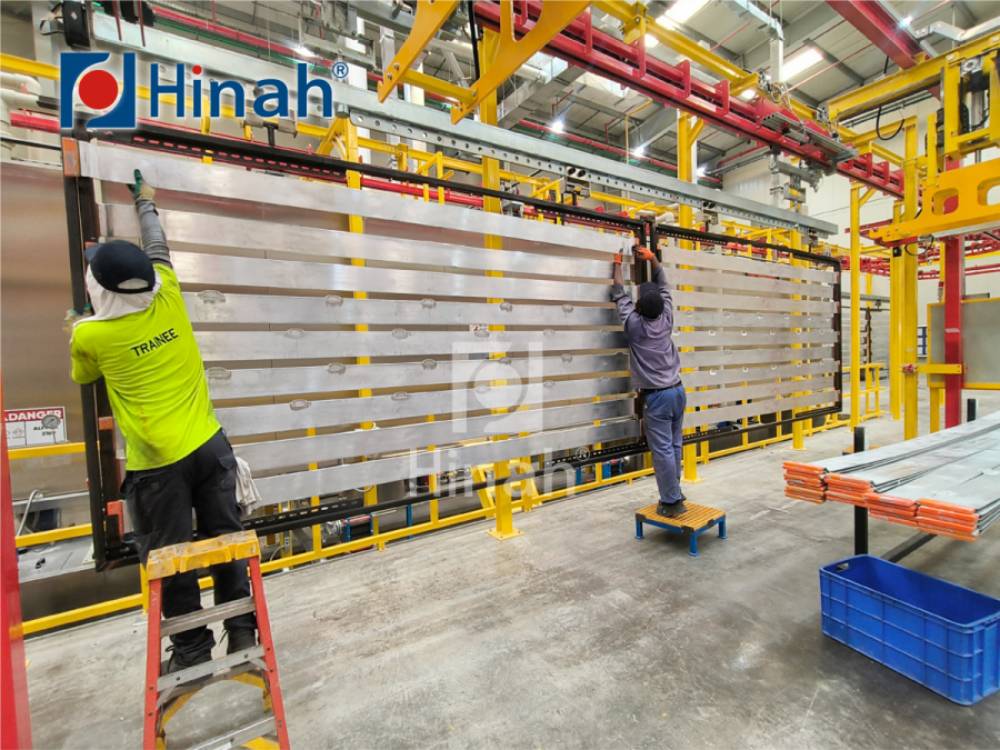
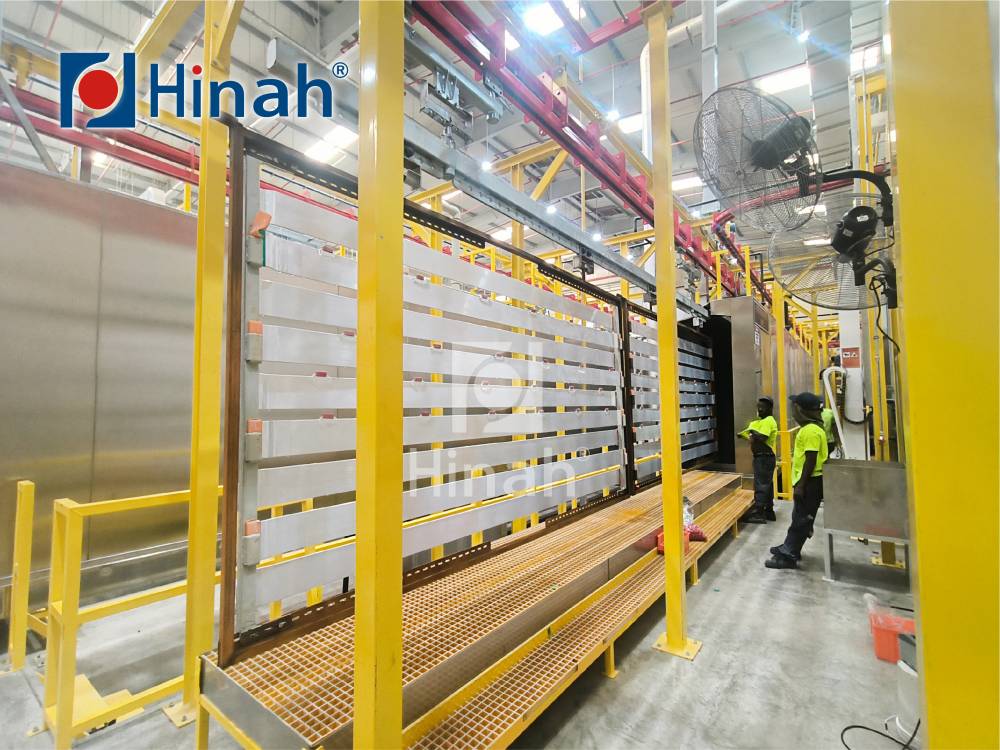
For mixed-length production, the conveyor should provide enough flexibility for the longest workpiece while still allowing shorter busbars to move efficiently.
One common approach uses adjustable hanging positions. Operators can change the spacing between workpieces according to product length. This helps avoid excessive empty space on the conveyor and keeps the production rhythm more stable.
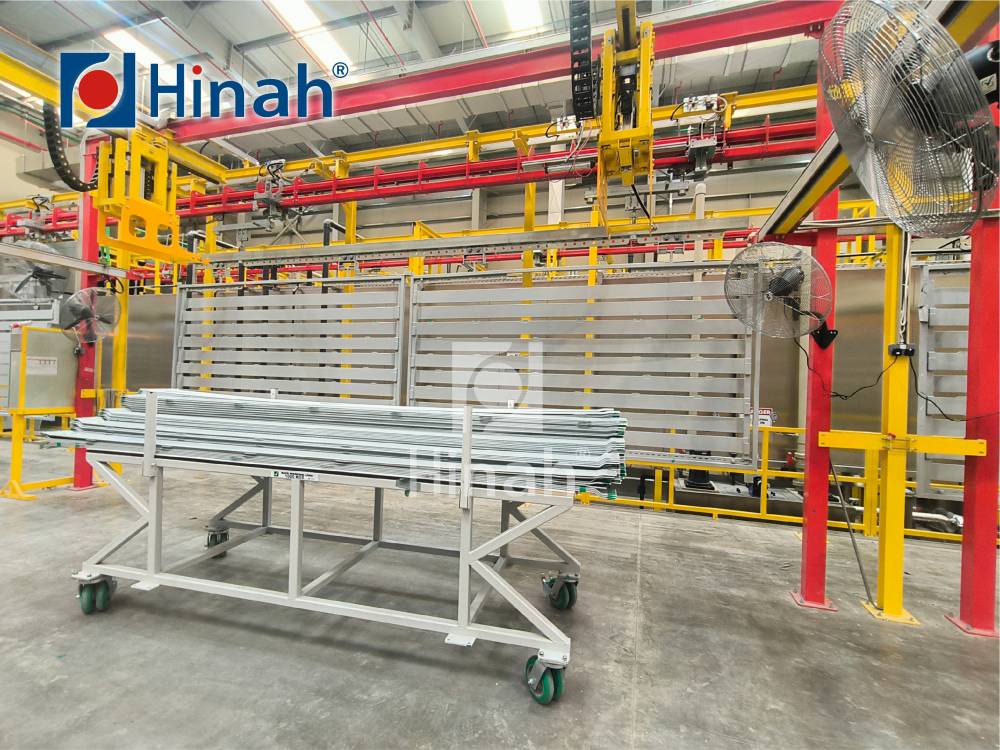
The loading area also needs attention. Long busbars require enough clearance at both ends, especially when workers transfer them from racks to hooks. The layout should prevent the workpiece from contacting the booth, conveyor structure, or nearby products during movement.
For very different product lengths, a zoning approach can work well. Short and long busbars can use different loading patterns while sharing the same pretreatment, spraying, and curing sections.
Consider Curing Time, Not Just Oven Length
The curing oven deserves special attention when product sizes vary in powder coating line.
The oven must provide the required temperature and time for the selected powder system. The actual curing result depends on the workpiece temperature, not simply the air temperature shown on the oven controller.
Longer or heavier busbars may heat differently from smaller sections. Therefore, the oven design should consider the material, cross section, mass, powder specification, and required production rate.
This is especially important for electrical applications because coating quality can affect insulation performance. IEC 60664-1 covers insulation coordination and requirements related to clearances, creepage distances, and solid insulation in low-voltage systems.
Allow for Future Product Changes
A line designed only around today’s products can become restrictive when the product range expands.
If future busbars may become longer or heavier, leave reasonable allowance in the conveyor, booth, oven, and loading area. Adjustable fixtures and programmable spray recipes can also make later product changes easier.
At the same time, flexibility should have a clear purpose. Oversizing every section of the line can create unnecessary space and energy requirements. The better approach is to define the expected product range first and then size each section around real production needs.
Safety and Powder Handling Still Matter
Product flexibility should never compromise safety.
Powder coating involves fine particles, and OSHA notes that some combustible materials can become explosible when dispersed as dust under the right conditions. NFPA 33 also provides requirements intended to reduce fire and explosion hazards in spray application processes involving flammable or combustible materials.
For this reason, the booth, powder recovery system, ventilation, electrical components, and housekeeping procedures should all follow the applicable requirements for the installation location.
A Practical Powder Coating Line Design Approach
When specifying a powder coating line for different busbar lengths, start with a clear product matrix:
- Minimum and maximum busbar length
- Width and thickness range
- Copper or aluminum material
- Maximum workpiece weight
- Required coating thickness and insulation performance
- Production quantity by product size
- Powder type and curing requirements
- Loading and unloading method
From there, the conveyor, spray booth, curing oven, and control system can be designed as one integrated process.
The key is not to build the largest possible line. It is to build a line that handles the real product range reliably while leaving enough flexibility for future production. For busbar coating, dimensional variation should be treated as a core design parameter from the beginning, not as a problem to solve after installation.