
Powder Coating Pretreatment Tank: Volume, Heating, Drag-Out
A powder coating pretreatment tank looks simple from the outside: a box of hot water and chemistry. Inside, three numbers decide whether parts come out clean — working volume, drag-out, and heat input. On a powder coating pretreatment system, those numbers are fixed long before the first part is hung. Get them right, and the tank fits the line instead of the line fighting the tank.
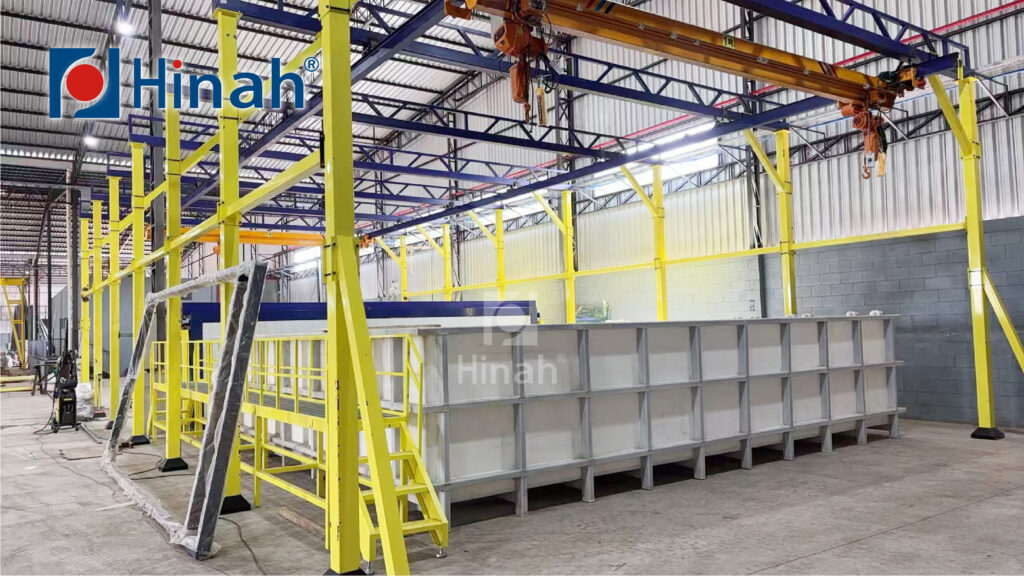
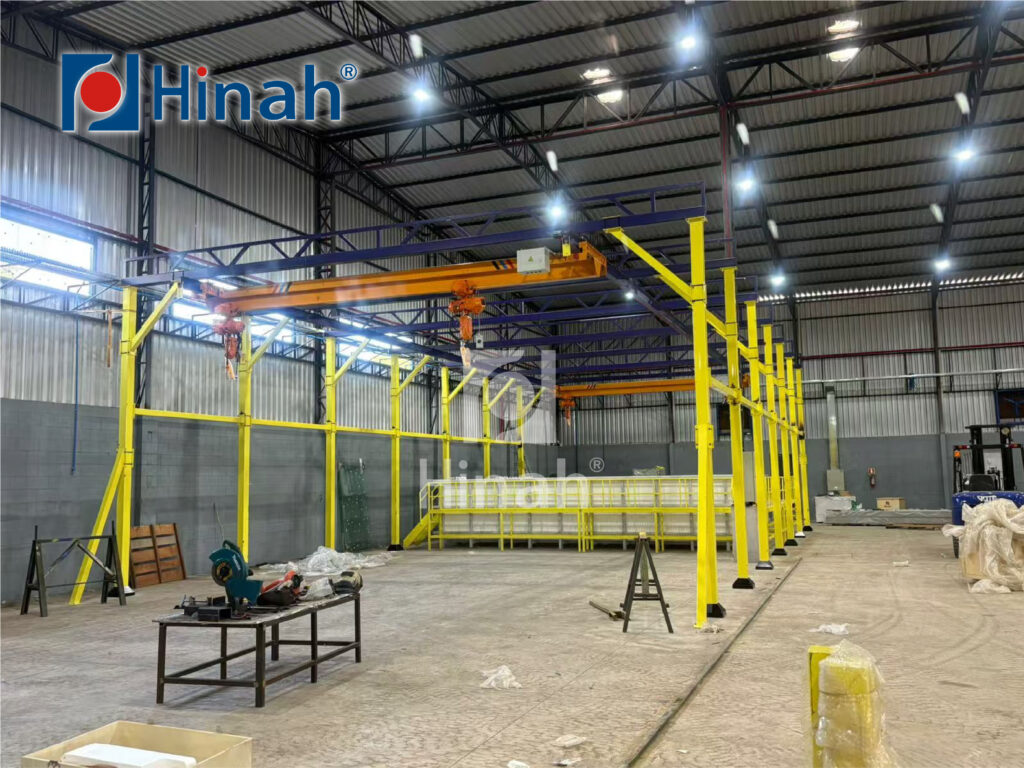
What Sets the Volume of a Powder Coating Pretreatment Tank?
Start with throughput, not floor space. Three inputs drive the number: hangers per hour, the envelope of one loaded hanger, and the dwell time the chemistry needs.
| Input | Value |
| Line speed | 60 hangers per hour |
| Dwell time in the bath | 120 seconds |
| Hangers inside the bath at once | 2 |
| Part plus rack displacement | 0.35 m³ per hanger |
| Working volume | 0.7 m³ |
| Tank volume with heel and freeboard | 1.8–2.0 m³ |
Two hangers sit in the bath at the same time at that speed. Their displacement sets the floor, and the tank then needs about 2.5 times that figure. The extra covers freeboard for immersion, sludge space under the work zone, and room for pump draw. Thermal expansion also matters on large baths, so keep the overflow weir free to move.
Alkaline cleaners usually need 3–5 minutes and run at 45–60 °C. Phosphate stages run cooler and shorter. A tank sized for a 90-second dip will fail a 5-minute cleaner, so confirm the chemistry first and the volume second.
How Much Drag-Out Do the Rinse Stages Carry?
Every part leaving the tank carries chemistry with it. Flat panels lose roughly 0.05–0.1 L per square metre. Boxed parts, tube ends, and welded assemblies lose several times more, because the solution hides in pockets and gaps.
That loss drives rinse design. A single rinse needs a lot of water to keep conductivity low. Each added counterflow stage cuts the final rinse concentration at the same water flow, and two stages cover most job-shop lines. Three stages pay off when the parts are complex or the local discharge limit is tight, and the choice between 3-stage and 5-stage pretreatment usually comes down to exactly that.
Time over the tank counts as much as volume. A 10-second drain lets the film fall back before the part reaches rinse one, and that single detail removes a large share of the load.
Effluent rules matter here. EPA’s Metal Finishing Effluent Guidelines (40 CFR Part 433) set the discharge frame for this type of line. Rinse volume belongs in the tank specification, not in the wastewater plan added later. The powder coating pretreatment tank sets that number, not the rinse station downstream.
How Do You Heat a Powder Coating Pretreatment Tank?
Heat input for a powder coating pretreatment tank has to cover three loads. The steady loss through walls and lid comes first. Then the open surface, and last the spike when cold parts enter.
Insulation pays back fast. An uninsulated steel tank at 55 °C loses several times more heat than an insulated one, and the burner or heater element then runs almost nonstop.
| Option | Strength | Watch |
| Gas-fired immersion tube | Low running cost at large volume | Needs flue routing and clearances |
| Electric immersion heater | Simple control, small tanks | Power cost, element fouling |
| Direct steam injection | Fast recovery | Dilutes the bath, needs control |
Hold the set point within ±2 °C. A wider band changes the cleaning result from load to load. Operators then compensate with chemistry, and that costs more than the control loop.
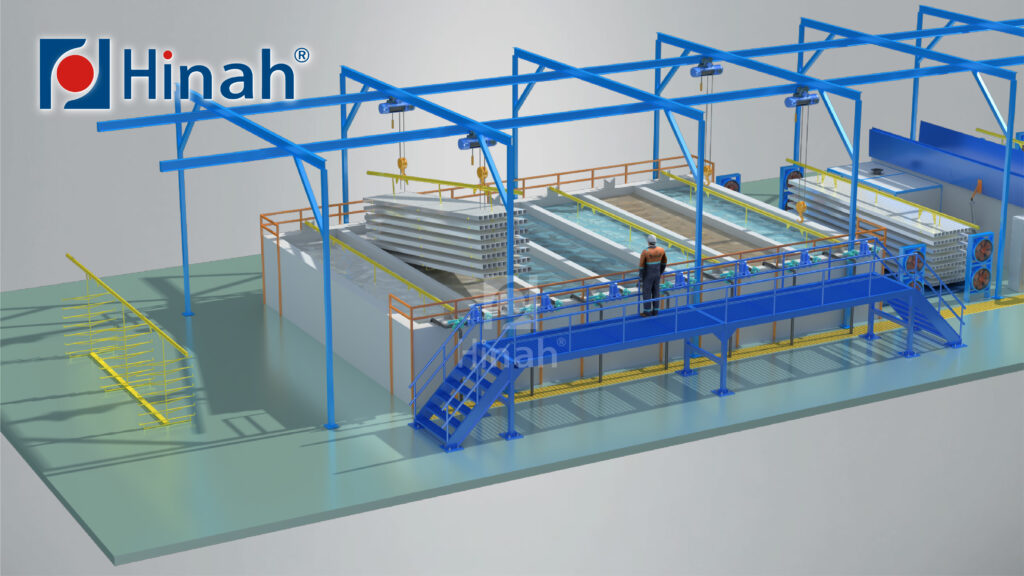
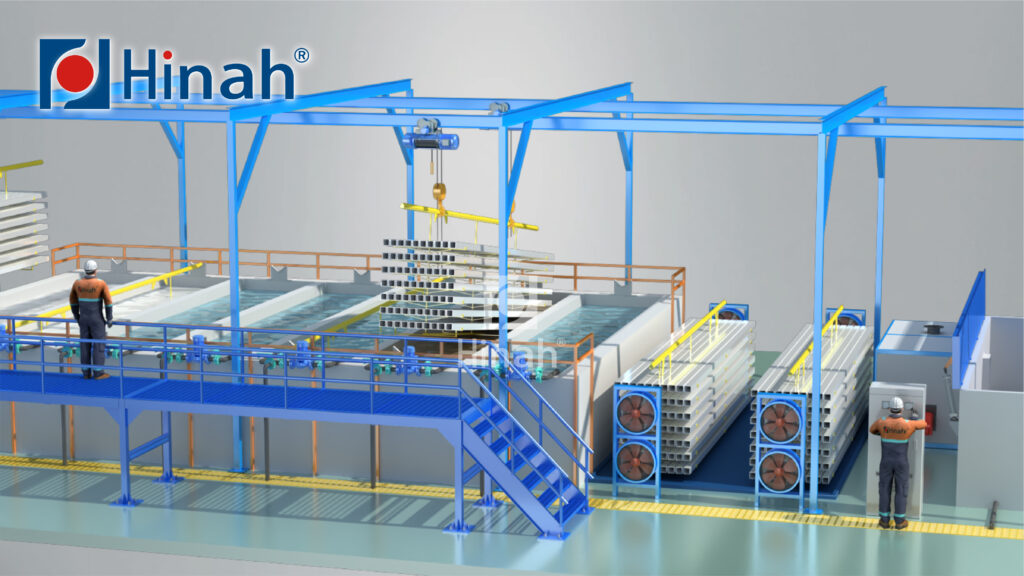
Tank Geometry, Agitation and Sludge
Shape decides how well the bath works. Sloped bottoms and a drain sump keep sludge out of the work zone. A weir and overflow box skim floating contamination. Corners without movement become dead zones, and dead zones grow bacteria and drop cleaning power.
Agitation helps more than extra chemistry. Pump circulation at 2–4 tank turnovers per hour, or eductors aimed at the work zone, keeps fresh solution on the surface. A powder coating pretreatment tank with poor movement needs a longer dwell, which then forces a bigger tank.
What Belongs on the Specification Sheet?
Write the sheet as a set of measurable values, not adjectives. This list covers the points that decide performance after installation. Compare every value line by line before you approve the drawing.
| Item | Value to state |
| Working volume | m³, with heel |
| Material and thickness | 304 or 316L to ASTM A240, 3–4 mm |
| Insulation | Type and thickness |
| Heat input | kW at design ΔT |
| Control band | ±2 °C |
| Pump turnover | 2–4 per hour |
| Rinse stages | Number and flow |
| Drag-out drain time | Seconds over the tank |
| Sludge removal | Sump and valve size |
| Spill containment | Bund volume |
Bottom line: sizing starts with chemistry and throughput, then moves to heat and geometry. A powder coating pretreatment tank that matches those inputs keeps rinse water low, holds temperature under load, and gives the powder stage a surface it can bond to. Send us your part envelope and line speed, and we will size the tank against your cleaner and your discharge limit. Adhesion testing to ASTM D3359 on the first batch will show whether the surface is ready.