
Robot vs Reciprocator for Powder Coating Lines
Choose by order book, not by price list. A reciprocator repeats one fixed stroke in front of whatever passes; a robot follows the contour of each part. Long runs of one section favour the reciprocator on cost and upkeep. Weekly shape changes favour the robot on coverage and changeover. The robot vs reciprocator decision is a question about your part mix, and the machine only settles it afterwards.
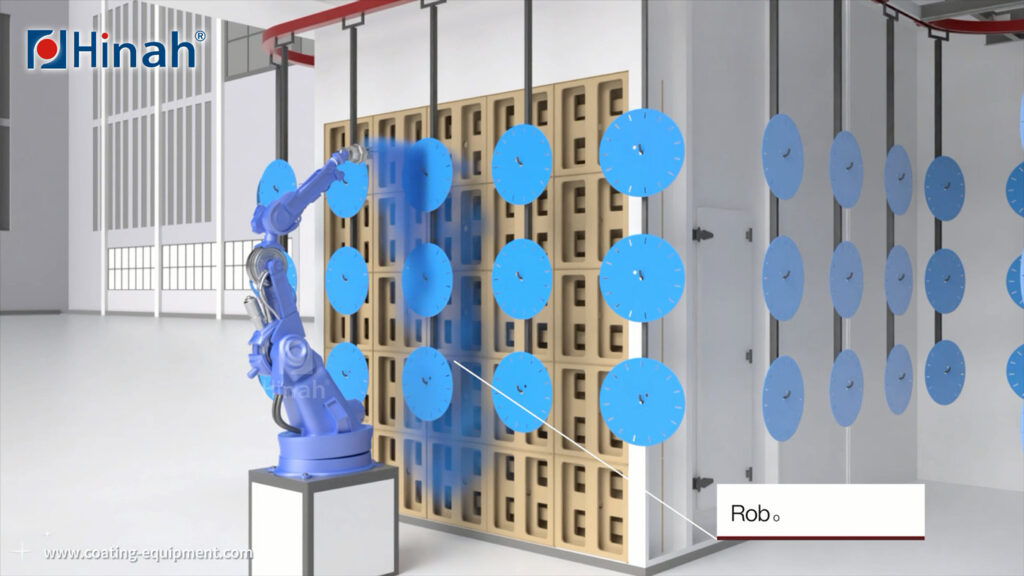
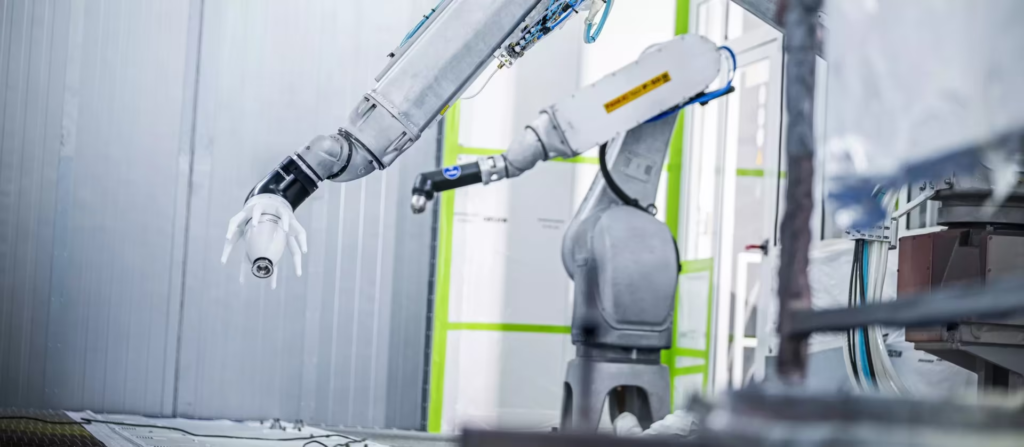
What Does a Reciprocator Actually Do to a Part?
On a powder coating reciprocator, the guns ride a bar that strokes up and down a set distance. Coverage comes from repetition. Every point on the part meets the same spray cone at the same distance, so film build stays predictable while the section holds. Stroke length has to match part height. A short stroke leaves a thin band at the top and bottom. A long one throws powder past the part.
A fixed motion means the machine has no idea what stands in front of it. A taller part arrives and nothing adapts. Someone changes the stroke, the gun height, or both before the first good part comes off. That is the whole trade: repeatability and simple mechanics, in exchange for zero flexibility.
Where Does a Fixed Stroke Fall Short?
A recess behind a narrow opening sits in shadow however long the stroke. The robot can tilt the gun into the opening and change its angle as it passes. A reciprocator sprays only from its mounting position. Two workarounds exist, and both lock in at the design stage. Angled guns at the booth entry and exit are one. A conveyor that turns the part so the opening faces the guns is the other. Either one costs floor space at the booth, the tightest part of most lines.
Height is the second soft spot. Where a family mixes short brackets with two-metre posts, the stroke suits one and compromises the other, and the film difference shows at the ends first. A gauge to ISO 2178 on steel, or ISO 2360 on aluminium, tells you how wide that gap runs. Measure top, middle and bottom of one part before you buy anything.
What Changes When You Switch Parts?
The hour between jobs decides most robot vs reciprocator choices, and it costs more than the machine. On a reciprocator, changeover is mechanical: stroke, gun position, sometimes nozzle, then a test part. On a robot it is a program recall — minutes, if the program exists, someone has validated it, and the operator trusts it.
Building those programs is the part buyers forget. Each new part number needs a path, a spray test and a first-article check, and the library pays back only if those parts come round again. Count the families you run a month and how far their heights spread. One family, week after week: the library is dead weight and the mechanical changeover is a short job. A dozen families with different heights: the reciprocator spends its week in adjustment, and every adjustment is a chance to set the stroke wrong.
When Is the Robot the Wrong Buy?
A robot earns its price on geometry it can exploit. On profiles, guardrail and lamp posts, it traces a path a reciprocator could trace with two guns. It also brings a controller, safety fencing, a teach pendant and a spares list. Someone has to own that. Back up programs, recover the arm after a crash, keep reducers and safety devices in order. A plant without a maintenance technician on shift buys a machine it cannot keep running.
Reciprocators fail in ways a fitter can see — a worn bearing, a slipping belt, a stroke that drifted. On a line that runs two shifts, that is not a small advantage.
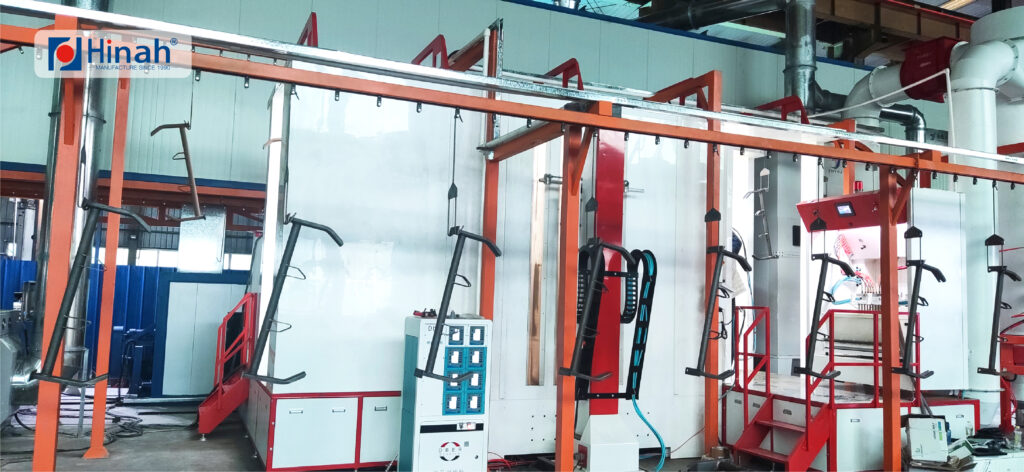
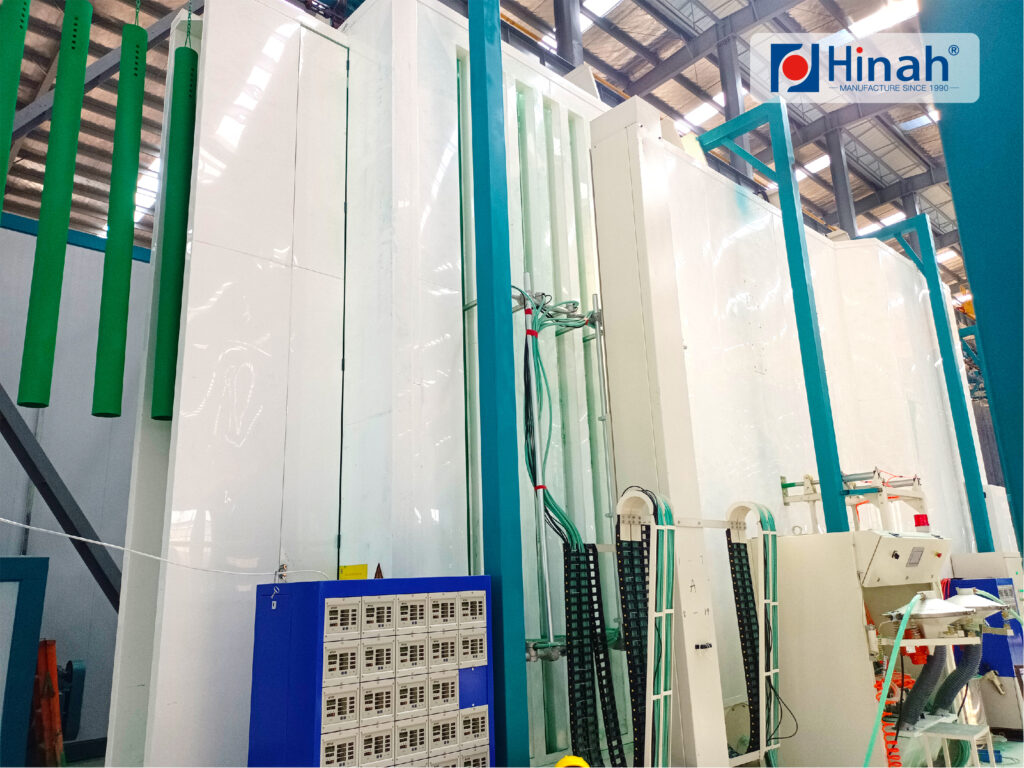
Can One Line Run Both?
Common on mixed order books. Two reciprocators cover the long runs. One powder coating robot takes the recessed and one-off parts at a second station. The hardware is the easy half. Integration means conveyor tracking, a rule for which program belongs to which hanger, and a defined path for a part that neither station handles. That rule belongs in the control system, not in the operator’s memory. Otherwise the hybrid becomes the slowest line in the plant whenever the experienced operator is away.
Which One Should You Specify?
Five answers settle the robot vs reciprocator shortlist. Count the families you run per month and measure their height spread. Then cavity depth against opening size, changeover frequency, and who maintains the line at night.
| Question | Reciprocator | Robot | Specify the robot when |
|---|---|---|---|
| Part height spread | Stroke must suit the tallest part | Any height, path set per part | Spread needs more than one stroke setting |
| Cavity and recess | Line of sight, angled guns help | Gun angle changes through the pass | Openings are narrow and deep |
| Film consistency | Repeatable while the section holds | Constant standoff, path speed decides | Tolerance is tight across shapes |
| Changeover | Mechanical, set by hand | Program recall, then first-article check | Families change weekly |
| Maintenance | Bearings, belts, simple drives | Reducers, controller, safety devices | A technician owns the cell |
| Spare parts | Short list, low cost | Controller and arm parts, longer lead time | Downtime cost justifies the stock |
Start from the order book and the height spread, then let the price list follow. A robot bought for a single family is an expensive reciprocator. A reciprocator bought for weekly shape changes is a permanent bottleneck. The robot vs reciprocator answer comes from what you coat, never from the machine.
What Do Buyers Ask Most Often?
Can a reciprocator coat a box section?
Only the surfaces in line of sight. Angled guns or a part that turns on the conveyor bring the opening into view. A deep recess behind a narrow opening still needs a robot, or a design change to the part.
Does a robot need more upkeep than a reciprocator?
More subsystems, more planned work: reducers, controller, safety devices and program backups, each on its own interval. Predictable, but it needs a named owner.
Can you add a robot to an existing reciprocator line?
Usually, and the arm is rarely the constraint. Conveyor tracking, the control handshake and booth space decide the outcome. If the conveyor cannot report position, the robot sprays blind.